CULTURE
Honey Hunting in Nepal: Inside the Gurung Cliffside Tradition
July 30, 2026
Somewhere on a sheer limestone cliff in Nepal's mid-hills, a hand-woven rope ladder unspools down a rock face, and a man climbs down it, unprotected, toward a honeycomb the size of a dinner table, while thousands of the world's largest honeybees swirl around him. It's one of the most striking images to come out of Nepal, thanks to a handful of well-known documentaries, and it's also a real, working tradition still practiced today by Gurung communities in the country's middle hills. Honey hunting isn't staged for cameras. It happens on the community's own calendar, for reasons that have far more to do with subsistence and ritual than spectacle, and understanding it properly means separating what's genuinely ancient practice from what's been dramatized for a lens.
The Himalayan Giant Honeybee
The bee itself is the reason any of this is possible. Apis laboriosus, the Himalayan giant honeybee, is the largest honeybee species on Earth, and it builds enormous single-comb hives — sometimes over a metre and a half across — tucked under rock overhangs on cliff faces, usually facing south for warmth and out of reach of most predators. That inaccessibility is exactly the point from the bees' perspective, and exactly the problem honey hunters have spent generations solving with nothing more than handmade rope ladders, long bamboo poles, and an intimate knowledge of a specific cliff passed down within a family or village.
The ladders themselves are worth pausing on. They're woven from bamboo and rope, sometimes stretching over 100 metres down a rock face, and rebuilt or repaired before every hunt rather than left in place. Climbing one, unclipped, while lowering a basket and fending off a swarm with a long pole in the other hand, is as physically demanding and genuinely dangerous as it looks — falls and serious sting injuries are a real risk the hunters accept as part of the work, and it's a skill that takes years of apprenticeship under an experienced elder to learn properly.
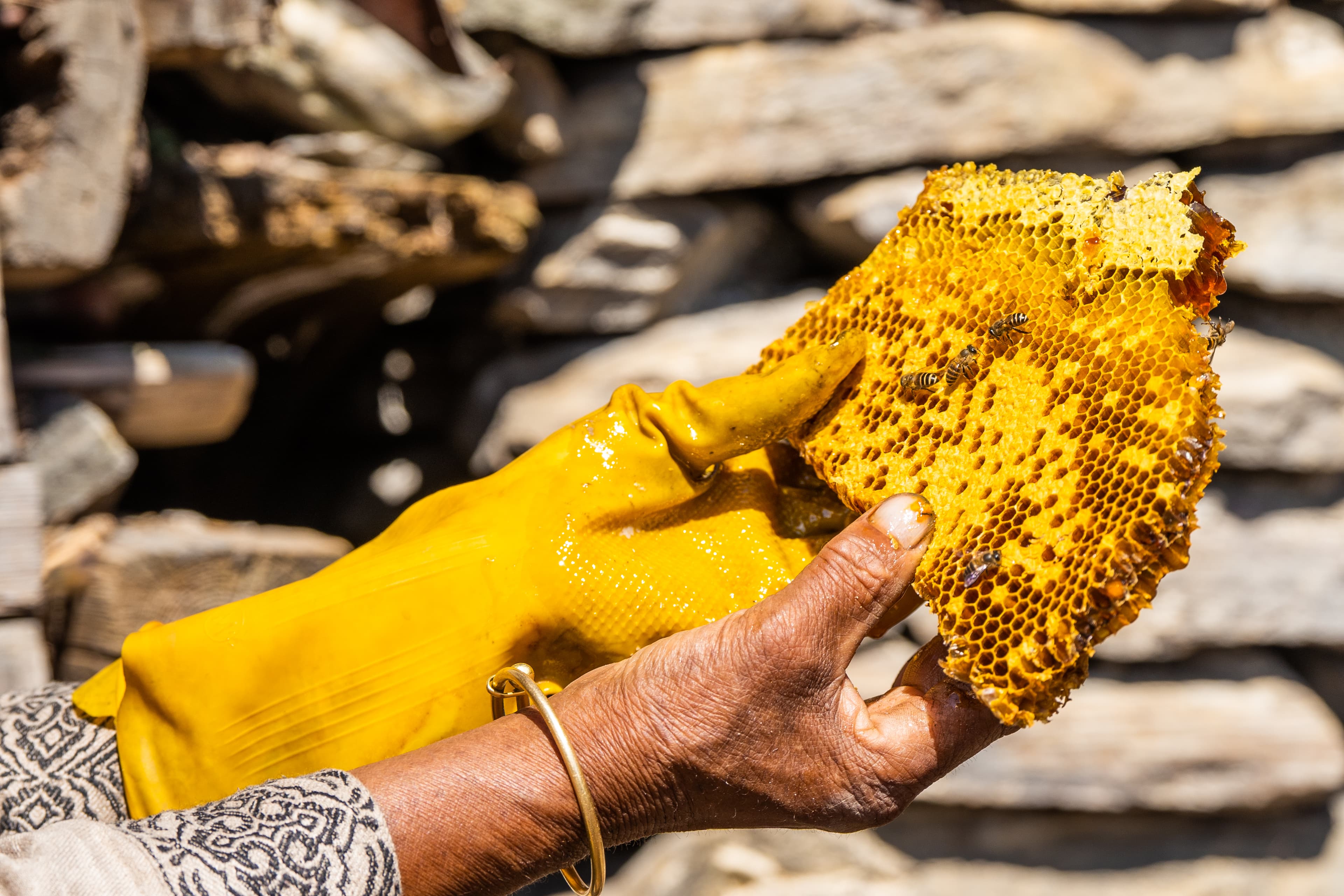
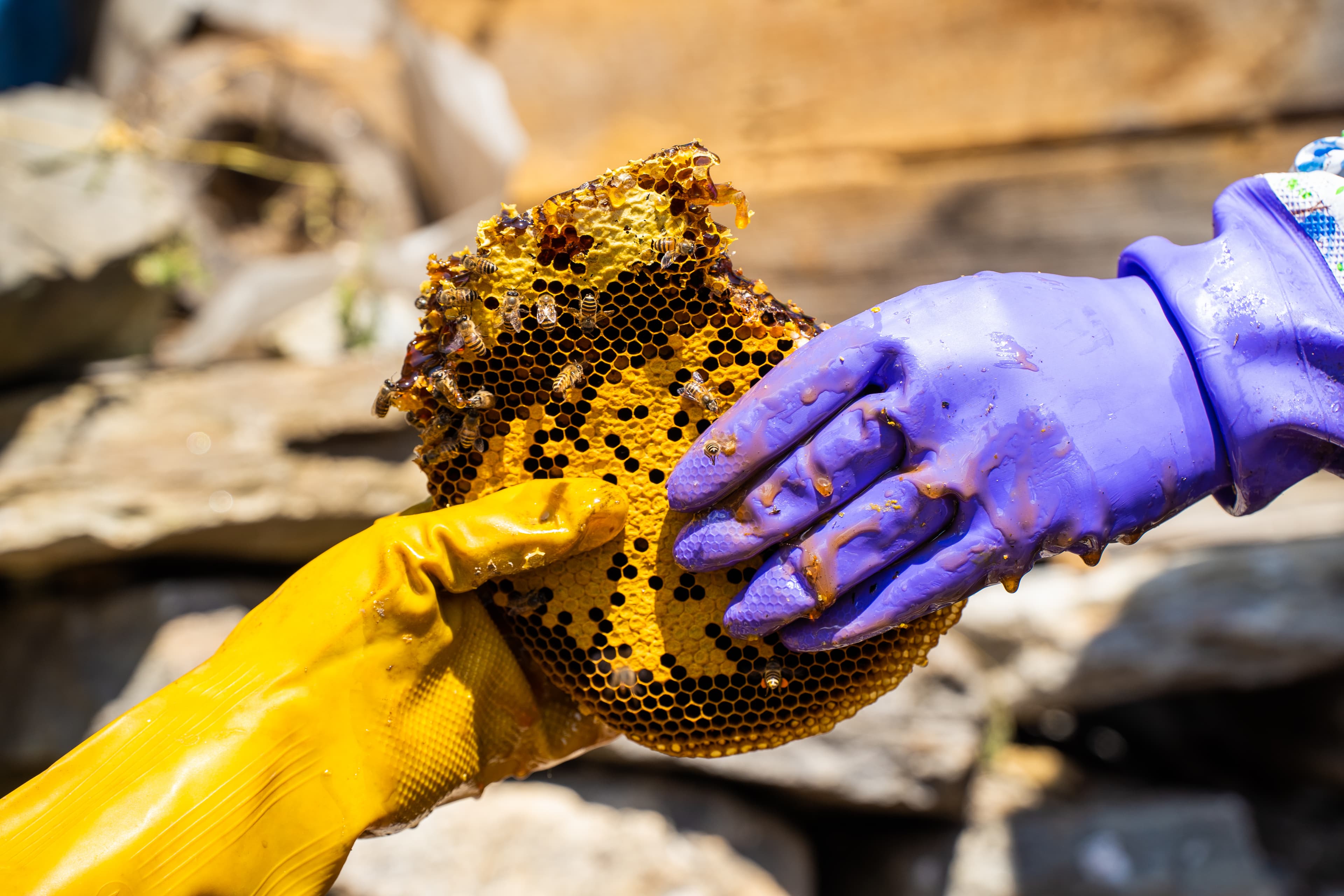
Preparation for a hunt is as much ritual as logistics. Many communities make offerings to the cliff or mountain spirits before a climb, and the hunt itself is usually a group effort rather than a solo one: some members manage the ladder and ropes from above, others build and tend smoky fires below the hive to calm the bees and encourage them to leave the comb, and the climber works with a long bamboo pole, a knife, and a basket to cut sections of comb free and lower them down. It's coordinated, practiced, and taken seriously — this is a community's honey supply and, increasingly, a meaningful part of its income for the year, not a performance.
Spring vs. Autumn Harvests
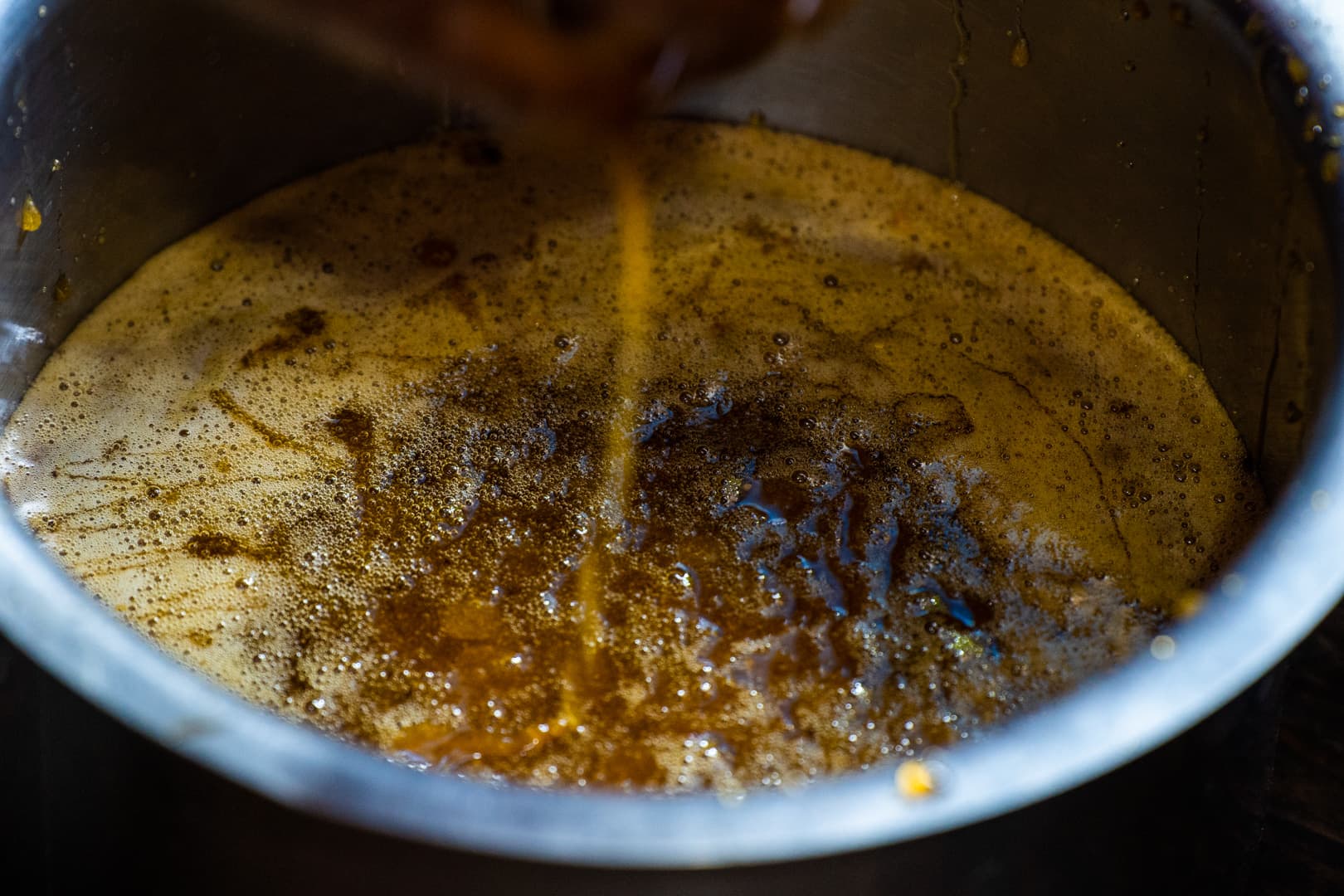
There are two harvest seasons, and they produce genuinely different honey. The spring harvest, typically April through May, comes after the bees have foraged on a wide range of wildflowers through the warmer months, and produces a lighter, more conventionally sweet honey. The autumn harvest, usually October through November, follows the rhododendron bloom in the hills, and this is where Nepal's honey hunting gets its most famous reputation: the resulting honey, often called 'mad honey' or red honey, contains grayanotoxins from the rhododendron nectar the bees have been feeding on.
Grayanotoxins are a naturally occurring compound that, in the small quantities found in this honey, produce a mild, short-lived tingling or lightheaded sensation — which is exactly why the honey has been used in traditional Gurung and broader Himalayan medicine for generations, and why it's developed a following among travellers seeking it out specifically. It's also genuinely potent in larger doses, with documented cases of nausea, low blood pressure, and irregular heartbeat from overconsumption, so if you do try it, a small taste is the traditional and sensible approach, not a spoonful. This isn't the honey to buy in bulk from an unverified seller and treat casually.
A Tradition Under Strain
Honey hunting is also a tradition that's visibly declining, and it's worth being honest about that rather than romanticizing it. Fewer young people in honey-hunting villages are learning the skill, partly because it's dangerous and physically brutal work, and partly because rural-to-urban migration has pulled younger generations toward other livelihoods entirely. Climate shifts affecting rhododendron bloom timing and bee populations add further pressure. The hunts that do still happen are increasingly significant events for the villages that maintain them, both economically and as a marker of cultural continuity, which is part of why treating a hunt as background content for a photo rather than what it actually is — a community's serious, risky work — matters.
Lamjung district, particularly around villages in the Himalayan foothills near the Marsyangdi valley, is the region most associated with honey hunting in the popular imagination, largely thanks to the documentary crews who've filmed there. But the practice, in smaller and less publicized forms, continues across scattered communities through Nepal's middle hills wherever the right cliffs, bee colonies, and generational knowledge still line up. It's not concentrated in a single easy-to-visit tourist site, and that's very much part of what keeps it authentic.
Ladders, Smoke, and Technique
The equipment itself reflects generations of trial and error rather than anything improvised on the day. The rope ladders are typically twisted from a fibrous local grass or bamboo strips, anchored at the clifftop to trees or driven stakes, and tested carefully before anyone commits their weight to a rung a hundred metres above the valley floor. The harvesting basket is usually lowered on a separate rope entirely, so the climber's hands stay free to work the pole and knife, and the whole system is coordinated almost entirely through shouted signals between the climber and the crew managing the ropes above — no radios, no modern climbing gear, just practiced communication under real pressure.
Smoke plays a bigger role than most people expect. Rather than protective suits, which are essentially absent from the traditional method, hunters rely on smoke from smouldering bundles of leaves and branches lit on the ground or a ledge below the hive. The smoke doesn't harm the bees; it interferes with the pheromone signals they use to coordinate a defensive response, which calms the colony enough for a climber to work close to the comb without triggering a mass attack. Stings still happen regularly regardless — hunters generally treat a moderate number of stings during a hunt as simply part of the job, not a sign anything has gone wrong.
Harvesting Sustainably
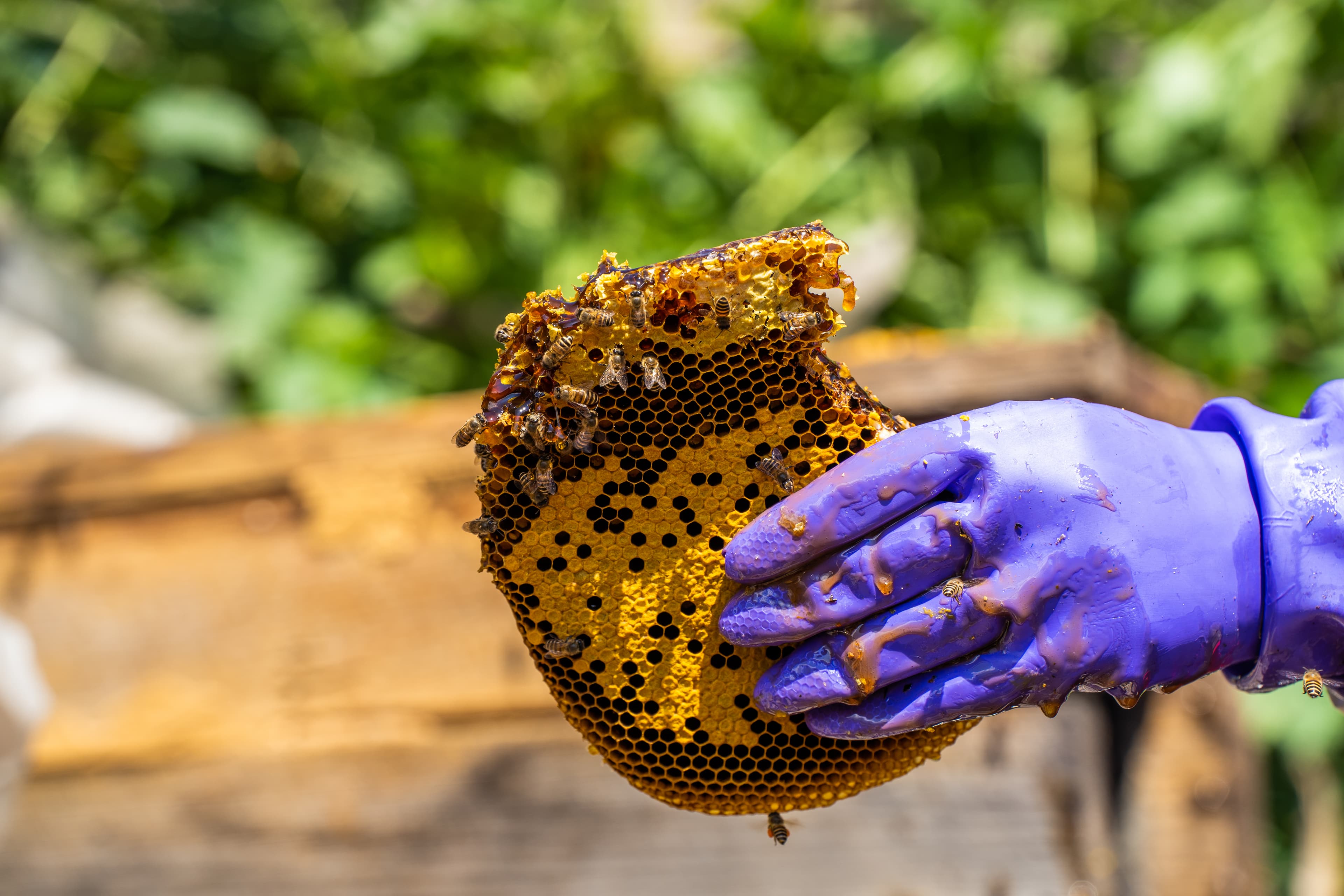
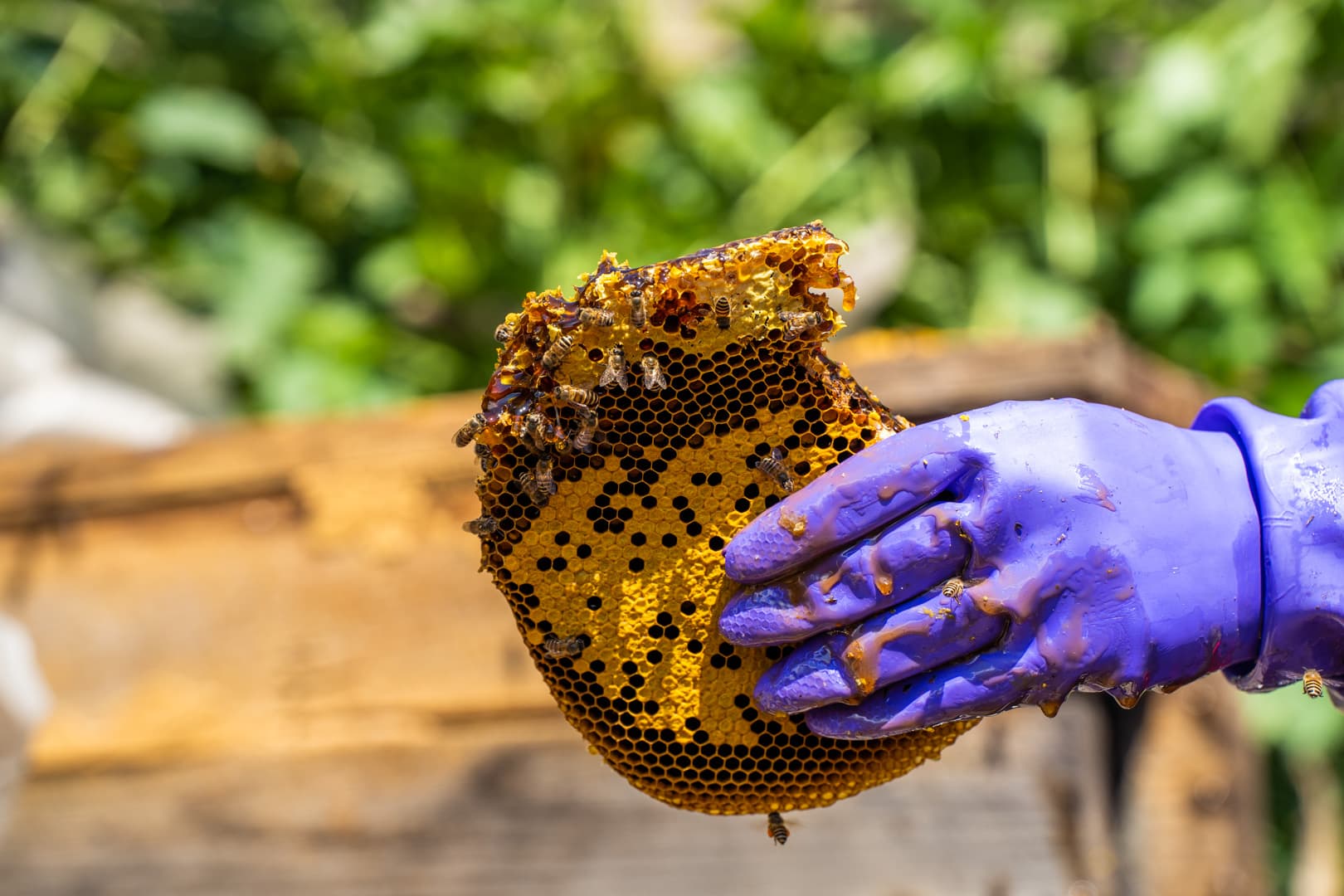
The comb itself is harvested in sections rather than stripped entirely. Experienced hunters deliberately leave a portion of the comb intact so the colony can rebuild and be harvested again in future seasons, which is as much practical long-term thinking as it is respect for the bees — a completely destroyed hive means no honey from that cliff next year, and possibly no colony at all. This selective harvesting is one of the clearest signs that what looks like a raw, high-adrenaline extraction on camera is, on the ground, a carefully managed practice built around sustaining a resource across generations rather than exhausting it in one dramatic afternoon.
Can Travelers Watch a Hunt?
If you're hoping to actually witness a hunt, the honest answer is that it takes real flexibility and a willingness to accept it might not happen on your schedule. Hunts are timed to the bees, the season, and the community's own decisions about when a particular hive is ready to harvest, not to a tourist's travel dates. Villages don't run hunts on demand, and treating a request to 'stage one for us' as reasonable is exactly the kind of pressure that damages a tradition already under strain. The trekkers and travellers who do get to see one usually do so by spending real time in a region during the right season and building a genuine connection with a community, rather than booking a fixed slot.
That's also why we don't sell honey hunting as a scheduled add-on or a guaranteed sighting on any of our trek itineraries. What we can do, for travellers planning a custom trip through the Annapurna foothills or Nepal's mid-hills during spring or autumn, is build in the time and flexibility that gives you a realistic chance of encountering the practice respectfully — through the kind of local relationships our guides have built over years working these same trails, not through a manufactured tourist performance.
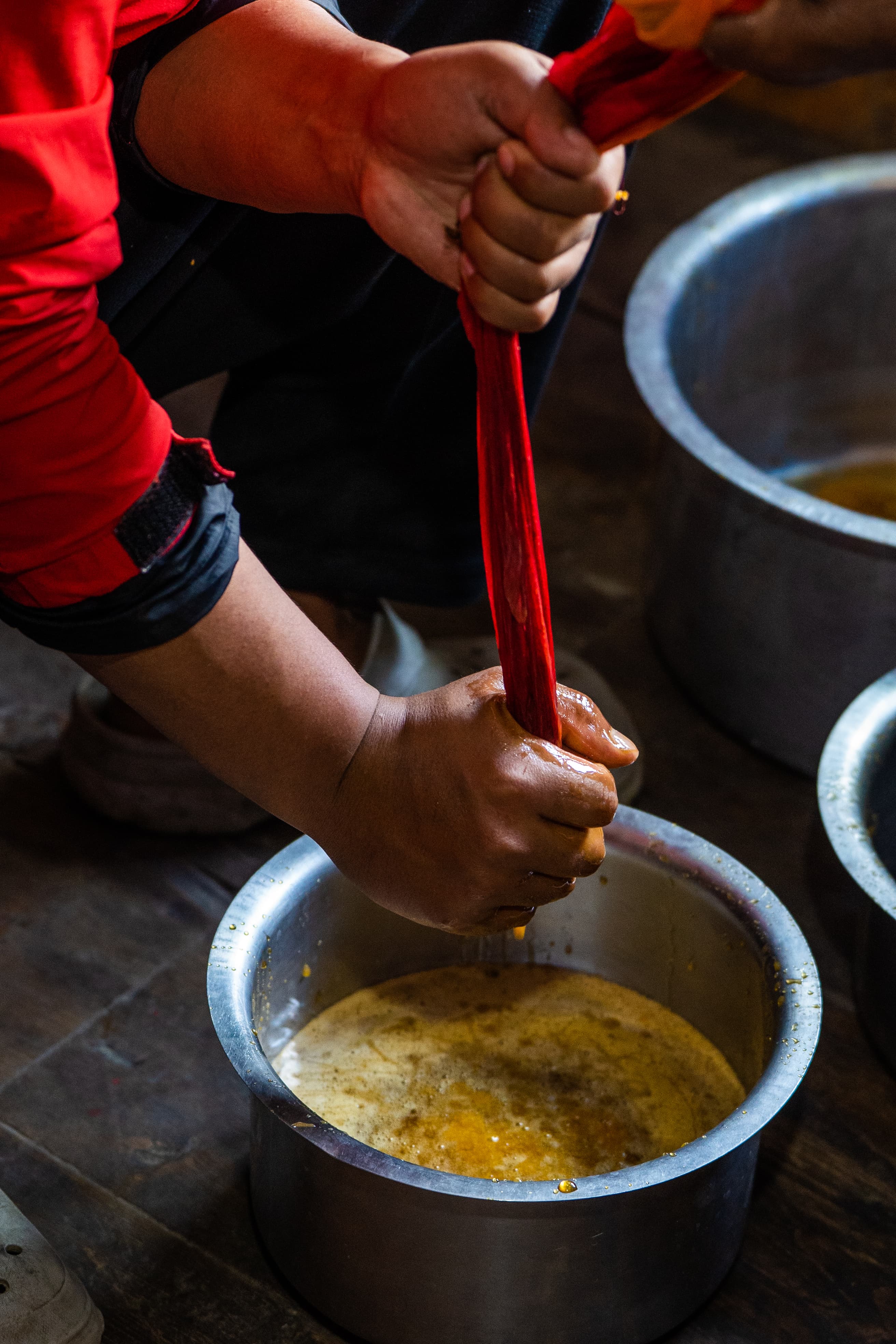
What you're far more likely to encounter on any trek through these regions, honey hunt or not, is the honey itself. Village teahouses and markets across the mid-hills sell both the pale spring harvest and, in season, small jars of the rarer red autumn honey, usually from someone in the family who either climbed for it or knows exactly who did. It's a better way to genuinely support the tradition than seeking out a hunt to photograph — buying directly from the communities who still do this dangerous, skilled work keeps the knowledge, and the income that makes passing it on worthwhile, where it belongs.
Planning a Trip Around It
If a custom itinerary through honey-hunting country, timed to spring or autumn, is something you're interested in building into a trip, it's exactly the kind of detail we like working out with clients directly — get in touch and we'll talk through what's realistic for your dates, rather than promising something no operator can actually guarantee.