TREK GUIDES
Annapurna Circuit vs Everest Base Camp: Which Trek Should You Choose?
June 24, 2026
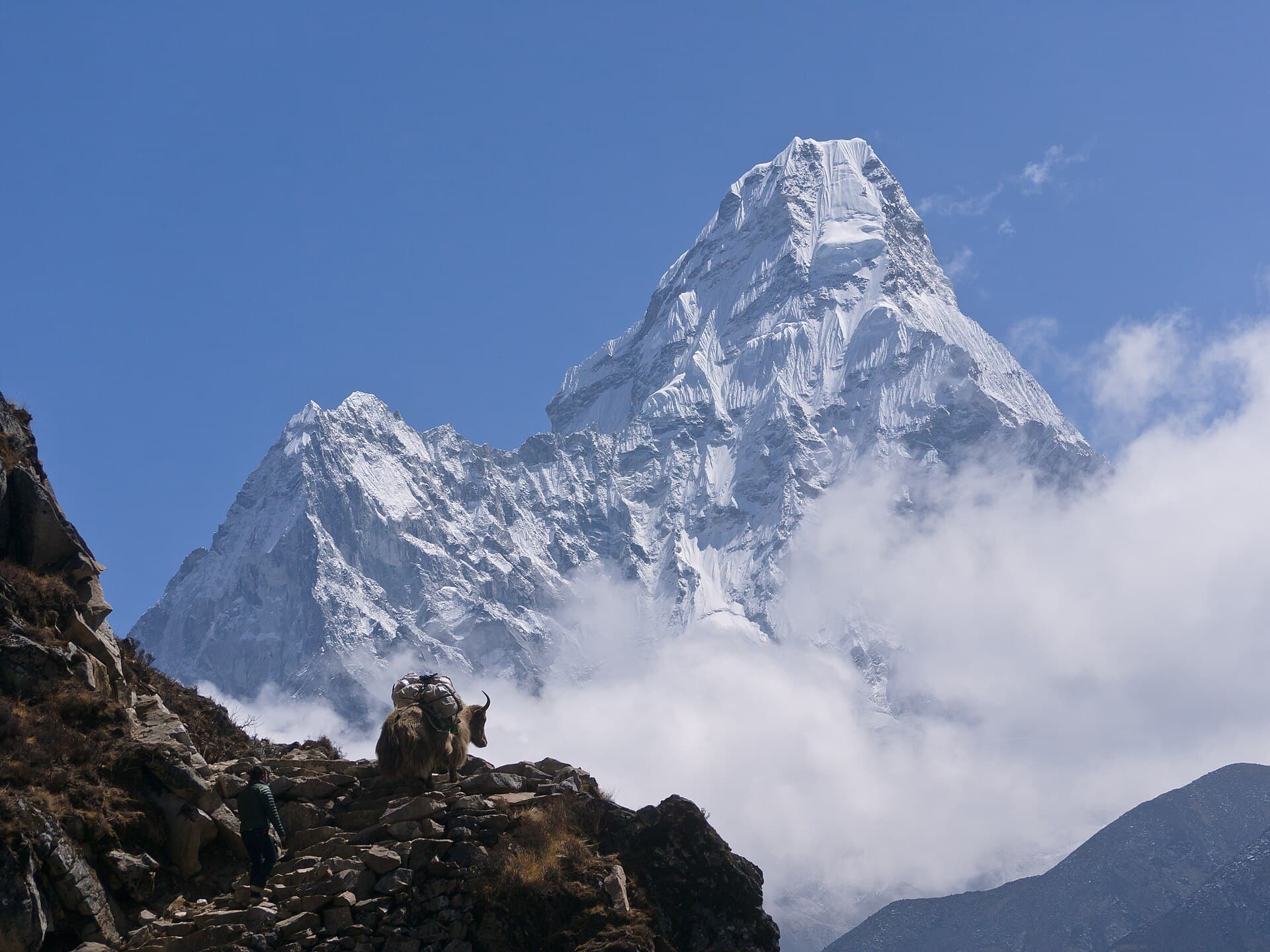
It's the question we get asked more than almost any other: if you could only do one trek in Nepal, should it be the Annapurna Circuit or Everest Base Camp? Both are bucket-list routes for good reason, both are achievable without technical climbing skill, and both will leave you with the kind of mountain views that don't fully translate to photos. But they're genuinely different trips, and the right answer depends less on fitness and more on what kind of experience you're actually after.
Scenery: Focus vs. Variety
Start with scenery, because it's the biggest structural difference between the two. Everest Base Camp is a single-valley, out-and-back trek with one overwhelming focus: the Everest massif, including Lhotse, Nuptse, and Ama Dablam, framing almost every day above Namche. The Annapurna Circuit, by contrast, is a point-to-point route that changes landscape constantly — subtropical forest and rice terraces in the lower valley, pine and juniper through Manang, high desert reminiscent of Tibet on the approach to Thorong La, and a completely different descent through Muktinath and the Kali Gandaki gorge on the other side. If you want variety over the course of a single trek, Annapurna wins clearly.
Altitude and Difficulty
Altitude and difficulty are closer than people assume, but they play out differently. Our Everest Base Camp itinerary tops out at Kala Patthar, around 5,545m, and gets there gradually with two dedicated acclimatization days built in along the way. The Annapurna Circuit, which we run as a 13-day trip, builds toward a single decisive obstacle: Thorong La pass at 5,416m, crossed in one long, demanding day that's widely considered the hardest single day of trekking either route offers. Everest Base Camp asks for sustained effort over more days at altitude; Annapurna asks for one very big effort concentrated into a single pass day.
The acclimatization structure reflects that difference directly. Everest Base Camp's rest days at Namche and Dingboche are spread through the middle of the trek, each one a deliberate pause to let your body catch up before continuing higher. On the Annapurna Circuit, the equivalent pause comes at Manang, the last major village before the push toward Thorong La, and it functions less as a general breather and more as final preparation for a specific, known obstacle a couple of days ahead. Trekkers who've done both routes often describe Everest Base Camp as the steadier climb and Annapurna as the one with a genuine 'exam day' partway through.
The way each trek ends differs too, and it's worth factoring into your planning. Everest Base Camp is a true out-and-back: after reaching Kala Patthar and base camp, you retrace essentially the same trail back down to Lukla for your return flight, seeing familiar villages again from the opposite direction. The Annapurna Circuit, having crossed Thorong La, descends into an entirely new valley on the far side, through Muktinath — a significant pilgrimage site for both Hindus and Buddhists — and down the dramatic Kali Gandaki gorge, before a road or short flight back to Pokhara. If you'd rather see new ground every single day of a trek rather than repeat the outbound trail, that's a meaningful point in Annapurna's favor.
Access and Reliability
Access and reliability matter more than people expect when comparing these two. Everest Base Camp requires a flight into Lukla, and that flight is genuinely weather-dependent — delays and cancellations happen, especially in the shoulder seasons, which is why any sensible itinerary builds in buffer days. The Annapurna Circuit starts by road from Pokhara, which removes that single point of failure entirely. If your travel dates are tight and you can't afford a multi-day flight delay eating into your trip, that's a real point in Annapurna's favor.
Crowds
Crowds shape the feel of a trek more than most first-timers expect going in. Everest Base Camp is Nepal's single most popular trekking route, and during peak autumn weeks the trail and teahouses can feel genuinely busy — which isn't necessarily a bad thing, since there's a real camaraderie to it, but it's worth knowing going in. The Annapurna Circuit sees fewer trekkers overall and, because it's a through-route rather than an out-and-back, the crowding is spread more evenly across the trail rather than concentrated in a handful of bottleneck villages.
Culture
Culturally, the two regions are distinct in a way that's easy to underestimate before you go. The Khumbu is Sherpa country, shaped by Tibetan Buddhism and by decades of mountaineering history — Tengboche Monastery and the string of chortens and mani walls along the trail reflect that directly. The Annapurna Circuit crosses through Gurung and Thakali villages in the lower valleys before the upper stretches, around Manang and Mustang's fringes, take on a strongly Tibetan-influenced character of their own. Neither is 'more authentic' than the other; they're simply different parts of Nepal's cultural map.
Cost
Cost differences are driven mostly by the Lukla flight rather than by anything structural about either trek. Everest Base Camp has to account for that flight in both directions, plus a national park entry permit and the local area fee that applies in the Khumbu. The Annapurna Circuit's road access removes the flight cost but adds vehicle transport at both ends, alongside its own conservation area permit. Guide and porter costs are broadly comparable between the two, and both now legally require a licensed guide under Nepal's 2023 trekking rules.
Teahouse quality and food availability are both excellent on either route, since these are Nepal's two most-developed trekking corridors. You'll find hot showers, wifi, and a real choice of dishes on both, though prices climb the higher you go on each. The Annapurna Circuit has a slight edge in variety of accommodation simply because the route passes through more distinct settlements over its length, while the Khumbu's lodges above Namche tend to be a notch more polished, reflecting decades of high-volume mountaineering and trekking traffic.
Temperature and weather patterns differ slightly between the two as well, which matters if your travel dates are fixed. The Khumbu's valleys run generally colder at equivalent altitudes than the Annapurna side, partly due to its more easterly, more exposed position, so nights above Dingboche and Lobuche can feel sharper than nights at a similar elevation on the Annapurna Circuit. The Annapurna side's lower valleys, by contrast, hold onto warmth and humidity for longer as you climb, which is part of why the rhododendron forests there are so lush lower down before the landscape turns to high desert past Manang.
For photographers and anyone chasing a specific look, the two treks reward different approaches. Everest Base Camp is about scale and singular subjects — Ama Dablam's distinctive spire, the Khumbu Icefall from a distance, Kala Patthar's sweeping dawn panorama of Everest itself — and rewards patience for the right light on a small number of iconic compositions. The Annapurna Circuit is more about variety and change — terraced fields, prayer-flag-strung suspension bridges, the stark switch to high desert past Manang, and the dramatic Kali Gandaki gorge on the descent — so it suits people who'd rather come home with a varied gallery than a handful of postcard shots of one mountain.
So, Which Should You Choose?
So which should you choose first? If seeing Everest specifically is the whole point of the trip, there's no substitute — go to the Khumbu. If you want more landscape variety, don't want to gamble on a mountain flight, and like the idea of a single big pass-day as the trek's centrepiece, the Annapurna Circuit is very hard to beat. Neither is meaningfully 'easier' than the other in a way that should decide it for you; they reward slightly different things.
It's also worth saying plainly: you don't have to choose forever. Plenty of our clients do one trek as their introduction to the Himalaya and come back within a year or two for the other, and a good number tell us afterwards that the second trip surprised them more than the first, precisely because the two routes are so different in character. If you're still torn, tell us what you're hoping to get out of the trip — big single-mountain views, variety of landscape, cultural depth, or a specific timeframe — and we can help you match it to the right one.
Weather Risk on Each Route
One more practical difference worth knowing: what happens if the weather turns against you. On Everest Base Camp, bad weather most commonly threatens your Lukla flight, which is why buffer days at the start and end of the trip matter so much — the walking itself can usually continue in poor visibility, just without the views. On the Annapurna Circuit, the risk is more concentrated at Thorong La itself, where heavy snowfall can close the pass entirely for a day or more, occasionally forcing a change of plans on the one day of the trek with no easy alternative route. Neither risk should put you off either trek, but they're different enough that a good guide plans around them in different ways.
Whichever you pick, the fundamentals of preparing properly don't change: train for consistent multi-hour walking days, respect the acclimatization schedule rather than trying to rush it, travel with a licensed guide, and pack in layers for a wide daily temperature range. Get those right and both routes are well within reach for most reasonably fit, well-prepared trekkers — the choice really does come down to which mountains you'd rather be walking towards.